


Development of a modular payload bay for transport drones.
Drones’ logistic application are nowadays one of the most interesting and challenging usage of unmanned system in urban and sub-urban environment. Unlike real scale aircraft, drones’ capability to mix short range-high payload missions with long range-low payload missions is one of the big operative lack of battery powered UAS.
Aim of this project is to fix this limitation with the proposal of a smart cargo bay management giving the drone the flexibility to perform mission with different range always carrying the maximum allowed payload.
The concept developed by Pro S3 is covered by patent no. U 0375664
Lo sviluppo di un prototipo dimostratore è stato finanziato dall’Unione Europea nell’ambito delle attività previste dal Centro Nazionale per la Mobilità Sostenibile – MOST ( https://www.centronazionalemost.it/)




Missione 4 “Istruzione e ricerca” – Componente 2 “Dalla ricerca all’impresa” – Riforma 4 “Mobilità sostenibile”
BANDO A CASCATA PER LE IMPRESE
SPOKE N 1 – AIR MOBILITY
Titolo del Progetto
Gestione intelligente della baia di carico per droni – SCAM4UAS
Codice CUP:
E13C22000980001
Soggetto Attuatore:
Regione Piemonte
Politecnico di Torino
Corso duca degli Abruzzi 24
10156 Torino
The activities planned for the project have allowed us to achieve the following results:
Detailed analysis of the mission possibilities for a drone equipped with a modular bay. The drone’s flexible deployment characteristics emerged as a key feature. By simply selecting the most appropriate bay, it can perform either short-range missions with a high payload or long-range missions with a reduced payload.
This flexibility proved to be particularly crucial for the movement of first-aid equipment and medicines. Especially in remote scenarios, the ability to choose the mission range without changing the type of drone was a decisive factor.
Performance study of energy storage technologies.
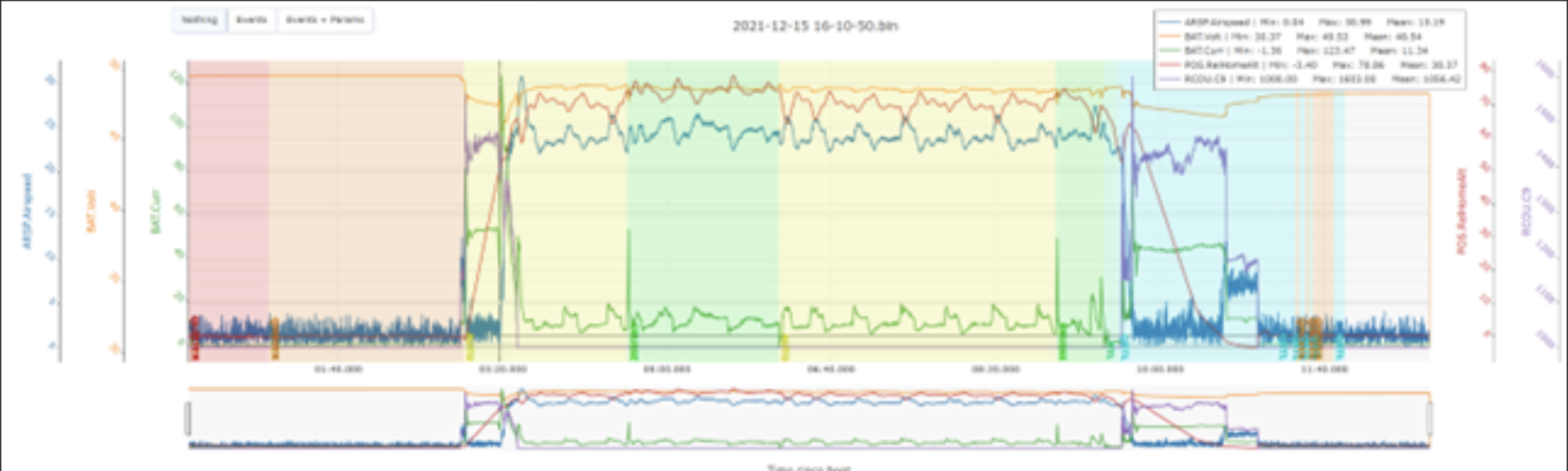
A very extensive research and performance analysis of various battery types was conducted. This analysis highlighted the possibility of undertaking long-range missions (> 100 km) by using the latest generation of batteries with very high energy density. An interesting trend of increasing cell performance also emerged, which could presage a further increase in mission possibilities over the next two years.
Project development and construction of a demonstrator prototype.
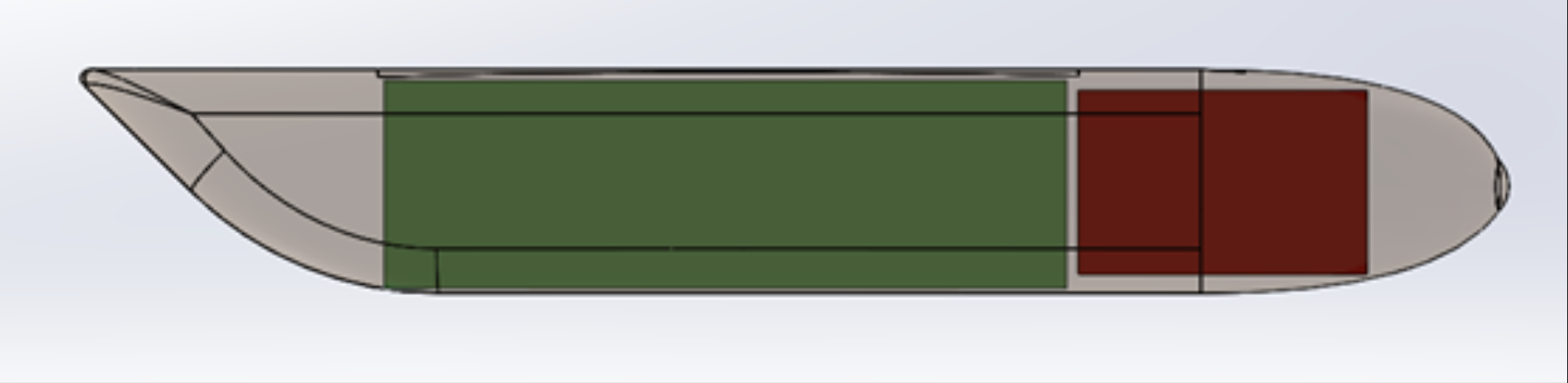

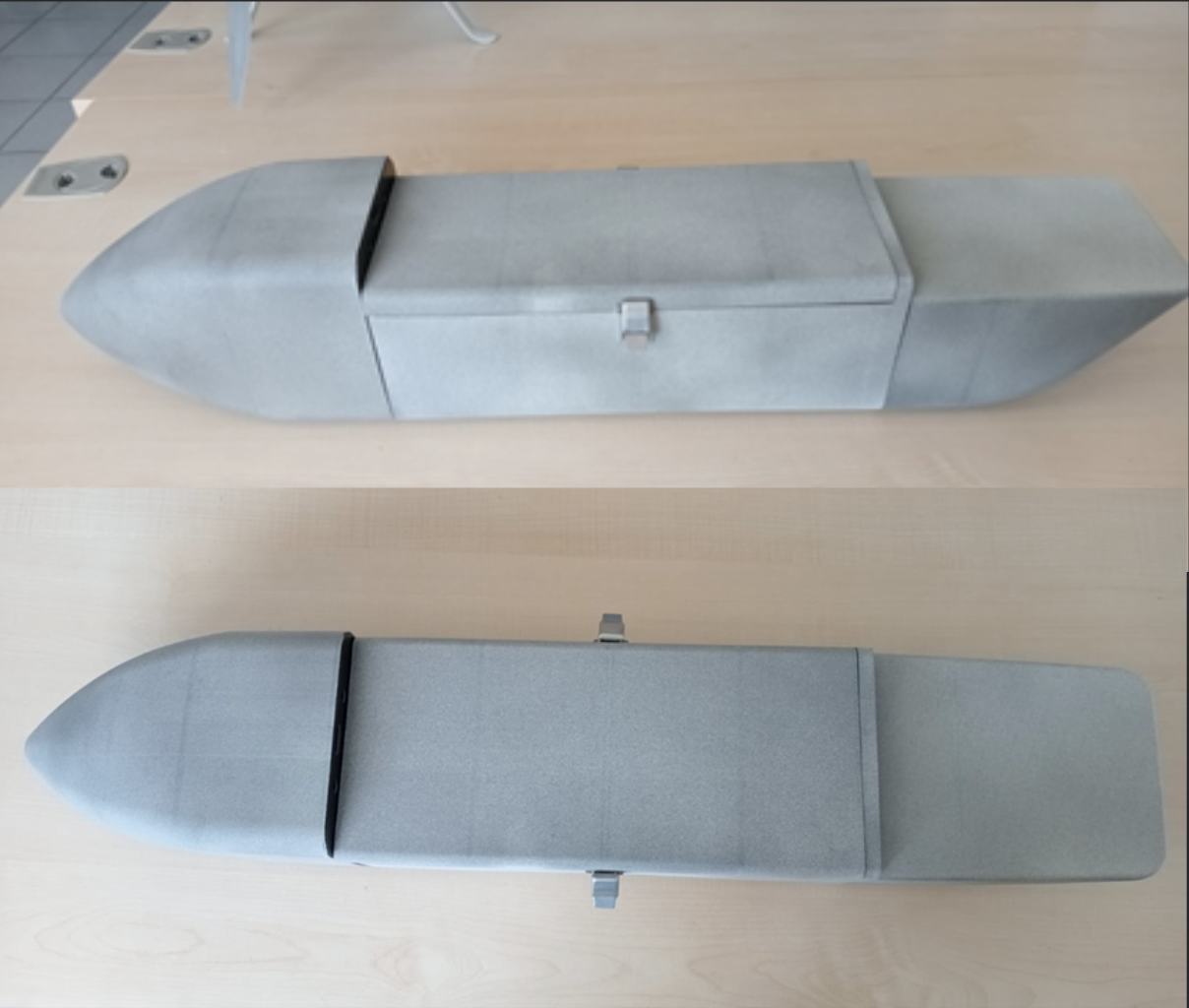
The project development of a bay with a size compatible with systems with a take-off weight of less than 25 kg was carried out. The bay prototype, developed using 3D virtual design techniques, was subsequently built and integrated into the drone.
“Scaling-up” study.

A “scaling-up” study was conducted, which involved hypothesizing an increase in the bay’s dimensions to boost its payload capacity. This led to important findings that make the system commercially sustainable even for the transport of small goods.